How to Tell When Fish Is Done (145°F Rule + Visual Cues)
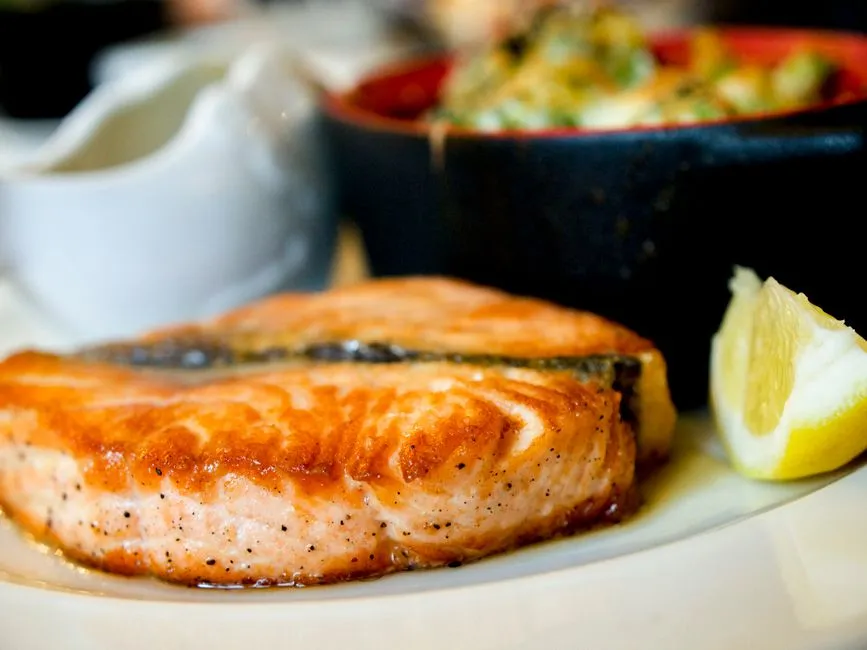
How to Tell When Fish Is Done
Fish is done when it reaches an internal temperature of 145°F (63°C) at its thickest point — that's the FDA's recommendation for fin fish, and it's the number an instant-read thermometer should show before you plate. No thermometer? Fish is done when the flesh has turned from translucent to opaque and separates easily along its natural lines when you press gently with a fork. Those two checks — one measured, one visual — agree with each other far more often than most cooks expect, and together they'll save you from both undercooked centers and the chalky, dry fillets that make people think they hate cooking fish.
The hard part isn't hitting 145°F. It's stopping there. Fish goes from perfect to overdone in a window of about two minutes, so the real skill is knowing when to start checking — and this guide covers exactly that.
The 145°F Rule, Explained
The FDA and USDA recommend cooking fin fish — salmon, cod, halibut, trout, tilapia, snapper, and the rest — to an internal temperature of 145°F (63°C). At that temperature, the proteins have fully set and any parasites or common bacteria of concern have been destroyed. It applies to every cooking method: baking, pan-searing, grilling, poaching, air-frying.
A few things worth knowing about that number:
- It's a floor for safety, not a race to beat. There is no bonus for 160°F. Every degree past 145°F squeezes more moisture out of the muscle fibers.
- Measure at the thickest point. Slide the probe in from the side, parallel to the cutting board, so the tip sits in the center of the fillet rather than poking through to the hot pan below.
- Carryover cooking is real. A fillet pulled from the oven keeps cooking as it rests — the internal temperature typically climbs another few degrees over several minutes. Many experienced cooks pull fish at 140°F and let the rest carry it home. If you pull it at exactly 145°F, serve promptly.
What about salmon at 125°F?
You'll see restaurant-style recipes calling for salmon cooked to 120–125°F for a silky, medium doneness. To be clear about the tradeoff: 145°F is the FDA-recommended safe temperature, and anything below it carries some added risk — a risk that matters most for pregnant people, young children, older adults, and anyone with a weakened immune system. If you cook salmon to lower temperatures by choice, use high-quality, properly handled fish and understand you're making an informed decision, not following a safety guideline. Our own baked salmon guide is written around hitting 145°F without overshooting, which is very doable with the timing-by-thickness approach.
The 4 Visual Cues: Telling Fish Is Done Without a Thermometer
A thermometer is a $15 tool that ends the guessing forever, and we genuinely recommend owning one. But cooks judged fish by eye for centuries, and the cues are reliable once you know what you're looking at.
1. Opacity: translucent means raw, opaque means done
Raw fish has a wet, glassy, semi-transparent look. As it cooks, the flesh turns opaque — salmon goes from deep translucent orange to soft matte pink; cod goes from pearly gray to bright white. Fish is done when it's opaque all the way to the center. Check by making a small cut into the thickest part with a paring knife and looking inside. A thin seam of slightly translucent flesh at the very center will finish cooking during the rest; a wide glassy band means it needs more time.
2. The flake test: separates easily, but still moist
Press the thickest part gently with a fork and twist slightly. Done fish separates willingly along its natural seams — the layers of muscle (the flakes) slide apart without resistance. Undercooked fish resists and feels rubbery or springy; the flakes stay glued together. Overcooked fish falls apart into dry shards before you even press. You're looking for the middle: flakes that separate cleanly and still glisten with moisture.
3. The cake-tester or knife check
This is the line-cook method. Slide a thin metal cake tester (or the tip of a paring knife) into the thickest part, hold it there for three seconds, then touch it to your lower lip or the inside of your wrist:
- Cold or cool — not done.
- Warm — close; check again in a minute or two.
- Hot — done, likely at or past temperature.
It's less precise than a thermometer, but it reads the center of the fish, which is what matters.
4. Albumin: the white stuff is a warning sign
Those white beads or curds that push out of salmon are albumin, a soluble protein that gets squeezed to the surface as the muscle fibers contract. It's completely harmless to eat. But a lot of it is a signal: the fish was cooked too hot, too fast, or too long. A little at the seams is normal; a thick white blanket means next time, lower the heat or pull the fish sooner.
Doneness Cues by Type of Fish
Different fish telegraph doneness a little differently. Same 145°F rule, different visuals:
| Fish | Raw appearance | Done appearance | Notes |
|---|---|---|---|
| Salmon | Translucent deep orange | Opaque matte pink, flakes easily | Fattier — more forgiving of slight overshoot |
| Cod / haddock | Pearly, semi-translucent gray | Bright white, large soft flakes | Lean — dries out fast past 145°F |
| Halibut | Translucent ivory | Opaque white, firm flakes | Very lean; err on pulling early and resting |
| Trout | Translucent pale pink | Opaque light pink, delicate flakes | Thin fillets cook in just a few minutes |
| Tilapia / snapper | Translucent white-gray | Opaque white, tender flakes | Thin fillets — start checking early |
| Tuna (cooked through) | Deep translucent red | Opaque tan-brown throughout | Often served rare by choice; see caveat below |
A note on tuna and rare fish: tuna is frequently served seared outside and rare inside. Like the 125°F salmon question above, that's a deliberate choice that departs from the 145°F guideline — the raw-consumption caveats apply, and rare preparations should use fish that was commercially frozen and handled for that purpose.
Shellfish plays by different rules. Shrimp, lobster, and crab are done when the flesh turns pearly and opaque — for shrimp, that means pink shells, opaque flesh, and a loose C-shape curl (a tight O means overcooked). We cover the full timing in how to cook shrimp so it stays tender.
Why Is My Fish Dry? (And How to Stop It)
Dry fish is almost never a bad-fish problem. It's one of these:
- It went too far past 145°F. This is the cause nine times out of ten. Fish has little connective tissue and less fat than meat, so there's no forgiveness zone — moisture loss climbs steadily with every degree of overshoot. Fix: start checking early (see below) and pull at 140–145°F.
- The fillet was thin and the heat was fierce. A half-inch fillet under a broiler can blow past done in a minute. Fix: match method to thickness — thin fillets like gentle heat and short times.
- No carryover allowance. If it read 145°F in the pan and then rested five minutes under foil, it was served closer to 150°F. Fix: account for the rest, or skip the foil tent for thin fillets.
- A lean species cooked like a fatty one. Cod and halibut have far less fat than salmon, so the same overshoot feels twice as dry. Fix: give lean fish extra attention, and consider a sauce or butter baste as insurance.
When to Start Checking: The 10-Minute Rule of Thumb
An old guideline says to cook fish about 10 minutes per inch of thickness — useful, but only as a start-checking alarm, never a stop-cooking bell. Ovens run hot or cold, fillets taper, and pans vary. Use it like this:
- Measure the fillet's thickness at the thickest point.
- Estimate: roughly 10 minutes per inch at typical roasting or pan temperatures — so start checking a 1-inch fillet at 8 minutes, a ½-inch fillet at 4–5 minutes.
- Check with the thermometer or the cues above, then check again every minute or two.
The habit that changes everything is simple: check earlier than you think you need to. Undercooked fish has an easy fix — another minute of heat. Overcooked fish has none.
The Bottom Line
Cook fin fish to 145°F (63°C) at the thickest point, or until it's opaque throughout and flakes easily with gentle pressure. Start checking early — around 10 minutes per inch of thickness — measure from the side into the center, and remember that carryover heat finishes the job after the pan does. Master this one skill and every fish recipe on this site, and everywhere else, gets easier — the rest of our fish fundamentals build directly on it.