How to Poach Fish Gently and Check Doneness
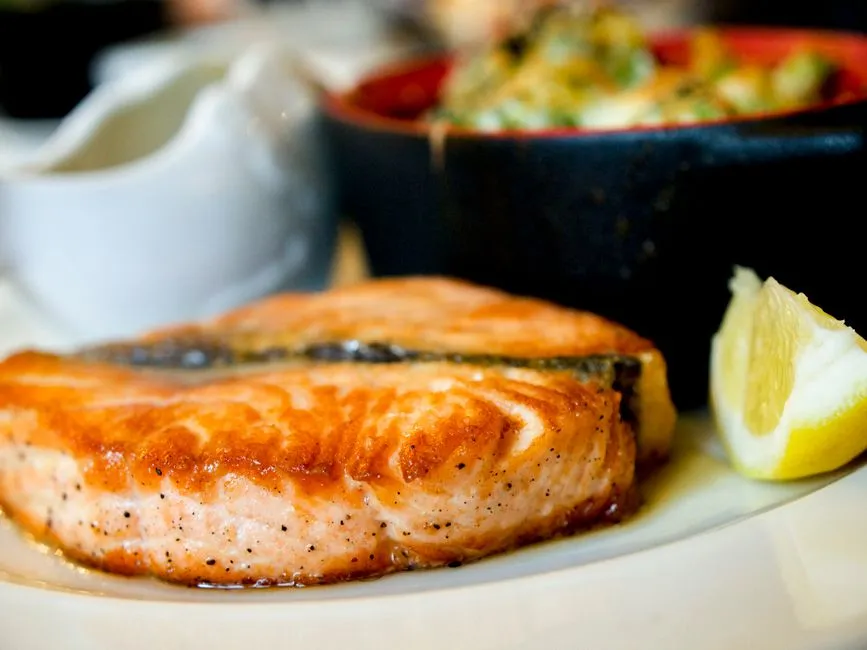
- How do you poach fish without overcooking it?
- What fish works best for poaching?
- Thaw and handle the fish safely first
- Choose a pan that supports the fish
- Build a simple poaching liquid
- What does gentle poaching liquid look like?
- Poach the fish in one calm layer
- Check doneness at the thickest part
- Lift the fish without breaking it
- Keep high-risk diners away from undercooked fish
- A reusable poaching checklist
- Sources
How do you poach fish without overcooking it?
Poach fish in a wide pan with seasoned liquid held at a bare simmer, not a rolling boil. Arrange pieces in one layer, keep the liquid moving gently, and check the thickest part with a food thermometer. The U.S. Food and Drug Administration says most seafood should reach 145°F. Let thickness and shape decide when you begin checking; there is no single safe cooking time for every fish or fillet.
This is a fully cooked method. It does not include a rare, raw or undercooked variation.
What fish works best for poaching?
Almost any fish can be poached. The easiest piece to manage is evenly thick enough to lift without folding over the spatula. Cod, halibut and other firm white-fish portions are forgiving choices for a first attempt. Salmon and trout also poach well, though a delicate or very fatty piece may need more support when it leaves the pan.
Shape matters more than a fashionable species list. Compare the pieces before cooking:
- Even portions tend to reach the endpoint together.
- A thin tail and thick center will not cook at the same rate if left as one flat piece.
- Small, delicate fillets can break if the liquid boils hard or if they are lifted by one end.
- Skin-on pieces may hold together more easily, but the skin will not become crisp in moist heat.
- Very thick portions need a pan deep enough for the liquid to surround them without crowding.
If one fillet has a thin tail, fold that tail under to make the piece more even. Do not stack pieces. If the portions are substantially different in thickness, cook them as separate batches or expect to remove them at different points.
The University of Alaska Fairbanks Cooperative Extension notes that any fish can be poached and that handling it without breaking is the main difficulty. Its skillet method uses enough liquid to cover the fish and holds that liquid just at a simmer. Those two ideas—a supported piece and restrained liquid movement—do most of the practical work.
Thaw and handle the fish safely first
Start with properly thawed fish unless a tested recipe is written specifically for frozen portions. The FDA's seafood safety guidance gives three routes: thaw gradually in the refrigerator; for a faster thaw, seal the fish in a plastic bag and immerse it in cold water; or use a microwave's defrost setting only when the fish will be cooked immediately afterward.
Keep raw fish separate from ready-to-eat food. Use a clean plate for the cooked fish, not the plate that carried it raw. FDA directs cooks to wash hands with soap and warm water for at least 20 seconds after handling raw food and to wash boards, utensils, dishes and counters with soap and hot water between raw seafood and cooked or ready-to-eat food.
Blot excess surface moisture if it makes the fish difficult to grip. Check for pin bones before the fillet goes into the liquid. Keep the prepared portions refrigerated while the pan and aromatics are readied.
Choose a pan that supports the fish
Use a wide skillet or shallow sauté pan with a lid. The fish should fit in one layer with enough room to slide a broad fish spatula underneath. A cramped pan makes the pieces touch, hides their edges and encourages rough handling at the end.
Match the pan to the portions. A very large pan needs more liquid and takes longer to regain gentle heat after cold fish is added. A pan that is barely large enough makes removal awkward. Lay the uncooked portions in the cold, empty pan for a quick fit check if necessary, then move them back to their refrigerated plate and wash anything that touched the raw fish.
Have the thermometer, spatula, lid, clean serving plate and dry oven mitt ready before heating. Once the fish is close to done, stopping to find a tool is how a gentle method turns into an overcooked one.
Build a simple poaching liquid
Water, unsalted or lightly salted stock, and milk can all be poaching liquids. The University of Alaska Fairbanks Extension's fish-cooking guide also lists salted water, acidulated water, court bouillon and soup. You do not need a long ingredient list. Choose a liquid that suits the final plate and does not overwhelm the fish.
A practical starting combination is water or stock with a sliced shallot or onion, a strip of lemon peel, a bay leaf and a few herb stems. Bring the liquid up to a simmer long enough for the aromatics to flavor it, then reduce the heat before adding the fish. Strain the aromatics first if they will get in the way of the thermometer or spatula.
Check every packaged stock, seasoning blend and dairy product for allergens. Fish is one of the nine major allergens recognized in U.S. federal labeling law, and FDA requires the species of fish to be declared for major-allergen labeling. Milk is also a major allergen. A fish poached in milk plainly contains both; a stock may introduce wheat, soy, sesame or another allergen. Do not call the finished dish allergen-safe, and prevent cross-contact for anyone with a food allergy.
What does gentle poaching liquid look like?
The liquid should be just simmering when the fish cooks. Look for slight movement and occasional small bubbles rather than vigorous bubbling across the pan. A rolling boil knocks delicate flesh around and can pull the outside apart before the center reaches its safe endpoint.
Heat the seasoned liquid first, then lower the heat. Slide the fish into the pan with the thicker pieces toward the area that receives stronger heat. Add enough hot liquid to surround the portions according to the chosen pan method; for this covered skillet method, bring it just over the top of the fish without flooding the pan to its rim.
The cold fish will reduce the liquid's heat. Let it return to a bare simmer, then adjust the burner so it stays there. Do not turn the heat high to hurry that return. Cover the pan to reduce heat loss, but continue watching the liquid at the edge so it does not build into a boil.
No fixed burner number works across gas, electric and induction ranges. The right setting is the one that maintains that quiet movement in your pan.
Poach the fish in one calm layer
Once the fish is in the barely simmering liquid, leave it in place. Stirring is unnecessary and can break the portions. If an exposed corner remains above the liquid, spoon hot liquid over it carefully or adjust the piece with the spatula; do not press it down with your fingers.
Keep the lid closed between checks. Each check releases steam and changes the heat in the pan, so make it purposeful. When you do lift the lid, turn your face away, keep your hands out of the steam path and use a dry oven mitt. Hot liquid and steam can cause serious burns.
Begin checking based on the thinnest-looking likely finish, not an internet clock. Species, starting temperature, thickness, pan material, liquid depth and burner behavior all affect the cooking time. A timer can remind you to look, but it cannot certify doneness.
Check doneness at the thickest part
Use a food thermometer as the final check. FDA says most seafood should be cooked to an internal temperature of 145°F. Measure the thickest part of each portion rather than the liquid around it.
For a thick piece, insert the probe into the center from the side so the sensing area sits in the coolest part. For a thin fillet, lift one edge with the spatula and insert the probe sideways; this gives the probe more fish to pass through than a straight-down measurement. Keep your hand clear of the hot liquid.
Visual changes can tell you when to reach for the thermometer. The flesh generally becomes more opaque and separates more readily along its natural flakes. Those cues vary by species and are not a substitute for the temperature reading. Our guide to checking when fish is done explains how to combine the thermometer with visual cues.
Check more than one piece if their shapes differ. Remove each portion only after its thickest part reaches 145°F. A thin fillet may finish before a thick one; transferring it to the clean plate is better than holding every piece in the pan for the slowest portion.
Lift the fish without breaking it
Turn off the burner once the relevant pieces have reached the endpoint. Slide a broad fish spatula fully underneath one portion and lift it straight to the clean plate. Support a long fillet with a second utensil rather than letting one end hang and split.
Let excess liquid drain back into the pan without shaking the fish. If the skin stays behind, remove it from the liquid separately. Do not reach into the hot pan to retrieve a broken piece.
Raw fish has cooked in the poaching liquid. Do not spoon that liquid over the plated fish unless it has been fully cooked as part of the method. If you want a sauce, transfer the fish out first and follow a tested recipe that brings the liquid through its specified cooking step. Keep the fish hot for immediate service rather than leaving it on the counter while an improvised reduction takes shape.
For a dry-heat alternative with a similarly clear thermometer endpoint, use the site's baked salmon guide.
Keep high-risk diners away from undercooked fish
The FDA says pregnant people, children, older adults and people with weakened immune systems are at greater risk from foodborne illness and should avoid raw or undercooked fish or shellfish. This poaching method therefore has one endpoint for everyone: fully cooked fish verified at 145°F.
Do not taste the raw fish or the poaching liquid before cooking is complete. Do not offer a translucent center as a preference for a high-risk diner. Personal pregnancy, immune-system or dietary questions belong with the person's healthcare professional; mercury questions route to the current FDA/EPA fish advice for the species and serving pattern.
If someone develops symptoms after eating seafood and foodborne illness is suspected, FDA advises contacting a healthcare provider immediately. For a suspected serious allergic reaction, follow the person's emergency plan and seek prompt emergency care.
A reusable poaching checklist
Before the burner goes on, confirm that the fish is safely thawed, the pieces are arranged by thickness, the raw and cooked plates are separate, and the thermometer and spatula are within reach. Choose a pan that holds one layer and a liquid whose ingredients fit the diners' allergy needs.
During cooking, maintain a bare simmer, keep the lid movement controlled, and let the thermometer—not a universal clock—make the final decision. Check each distinct thickness at its center and remove portions individually at 145°F.
After cooking, transfer the fish with full support, treat the used liquid as having contacted raw fish, and wash hands, tools and surfaces. That is the whole method: quiet liquid, an even layer, a careful lift and a measured endpoint.